Ceiling painting
Ceilings are the hardest part of an interior to paint well and the part people least want to do themselves. Published rates run from about $13 to $22 per m², or roughly $500 to $1,500 for a room. The key checks before painting are stains, cracks and, in a house built before 2000, what a textured ceiling is made of. The interior painting page covers the rest of the room.
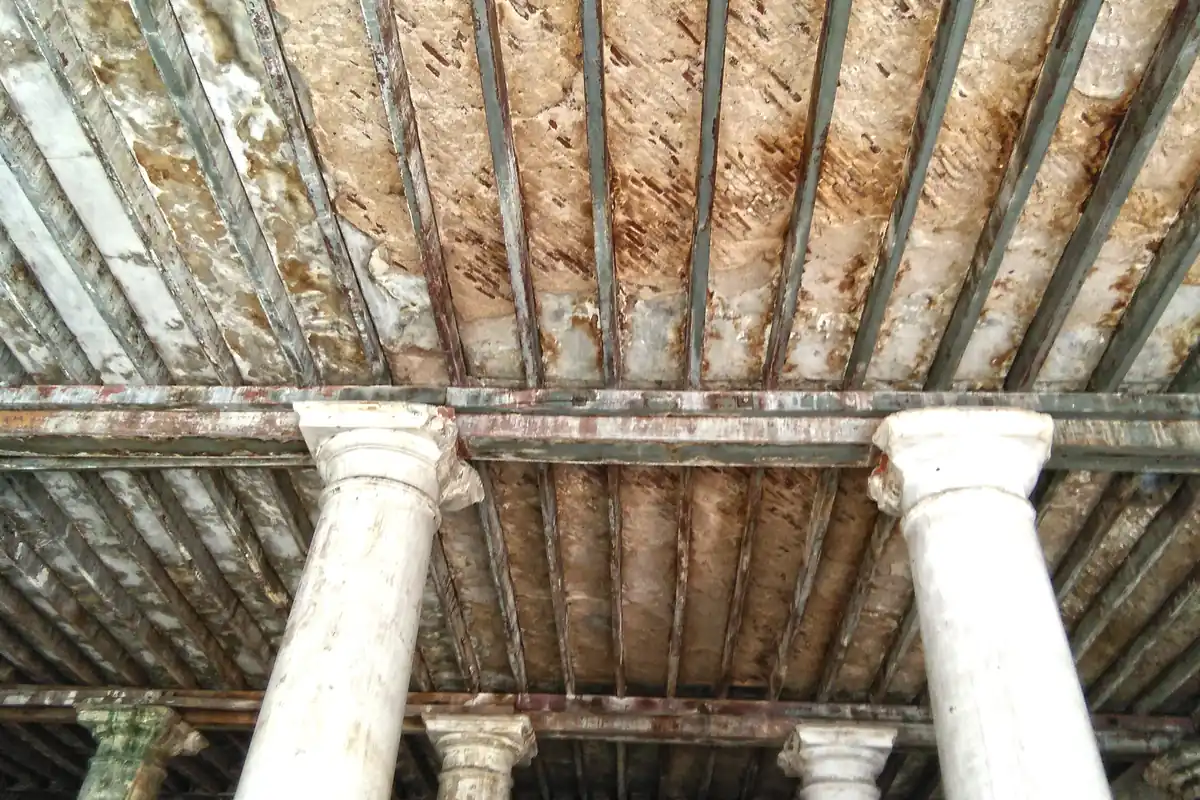
Why ceilings are painted first
A painter does the ceiling before the walls, because drips and spatter fall downward and the wall cut-in line is cleaner when it is painted last. Ceilings are rolled in one direction, wet edge to wet edge, so the finish dries without lap marks. Light raking across a ceiling shows every miss, which is why it is slow work.
The room is cleared or furniture gathered in the middle and covered, and floors are sheeted. Light fittings are loosened and dropped, or masked, by someone qualified to do so.
Stains, cracks and sagging joins
Water marks, smoke and old nicotine bleed through ordinary ceiling paint, so they are sealed with a stain-blocking primer first. Hairline cracks along plasterboard joins are filled and sanded. A ceiling that sags or has cracks that keep returning may have a fixing or moisture problem that a builder should look at.
- Find and fix the leak before treating a water stain.
- Seal stains with a stain-blocking primer, then two ceiling coats.
- Fill and sand joint cracks; check that the sheet is still fixed.
- Treat mould in bathrooms and kitchens before painting. See mould before painting.
Textured ceilings: test before anything else
WorkSafe lists textured or stippled ceilings among the places asbestos can be found in houses built before 1 January 2000. You cannot tell by looking. If a textured ceiling is in an older house, it is tested before anyone sands, scrapes, drills or water-sprays it. Sound material that tests clear can be painted with care.
If it does contain asbestos, removal is work for a licensed asbestos removalist, not a painter, and WorkSafe’s guidance on painting asbestos-containing material in good condition calls for no sanding or harsh scraping. Asbestos and textured ceilings explains the steps.

High villa ceilings and stairwells
Villas and bungalows often have studs well over three metres, and stairwells are higher again. Resene’s trade guide adds 15% for interior work above 3.5 m. The extra is for time on platforms and moving equipment, not for paint. Ornate cornices, ceiling roses and battened ceilings add brushing time on top.
Working at height indoors is done from proper platforms or trestles, not from a chair on a table. Villas and bungalows covers what else changes in older houses.
Choosing a ceiling paint
Most ceilings take a flat or matt acrylic ceiling paint, usually in a white or a lighter version of the wall colour. Flat paint hides small dips, joins and patching. Steamy rooms need a paint made for kitchens and bathrooms, often with a mould inhibitor. Low-odour paints are worth asking for in bedrooms.
Choosing interior colours covers ceiling whites and tints, and low-VOC paint covers odour and indoor air.
Old ceiling paint and lead
Ceilings in houses from the 1980s or earlier can carry old lead-based paint under later coats, and WorkSafe advises presuming it is there. Sanding overhead throws dust over the whole room, so preparation is done wet, with the floor sheeted and the dust collected with a HEPA vacuum. Children and pets stay out until it is cleaned.
Lead-safe repainting with children at home covers how to plan around the household.
What a ceiling repaint costs
Published rates sit at about $13 to $22 per m² before GST for repainting ceilings in good condition; the trade guide puts a ceiling that needs spot-priming, sealing and filling at about $22. One guide adds 20% to 30% on top of walls when ceilings are included. Stains, cracks, high studs and textured finishes add to it.
For whole rooms and houses, see what interior painting costs.
Asked before a repaint
- How much does it cost to paint a ceiling?
- Published rates run from about $13 to $22 per square metre of ceiling before GST, and one guide gives $500 to $1,500 for a room’s ceiling. High villa ceilings, stains that need sealing and a lot of cutting in around cornices push it up. Ceilings are often priced as part of a room.
- Can I paint over a textured or popcorn ceiling?
- Only once you know what it is. In a house built before 2000, WorkSafe lists textured ceilings among the places asbestos can be found, and only a sample test tells you. Sound material that tests clear can be painted with care. Suspect material is never sanded or scraped; a licensed asbestos removalist handles removal.
- Why do water stains come back through new paint?
- Because the stain is soluble and the new paint draws it back to the surface. Water, smoke and nicotine marks need a stain-blocking sealer before the ceiling paint. The leak that caused the stain also has to be fixed and the lining dried, or the mark returns.
- What sheen should a ceiling be?
- Flat or matt in most rooms, because it hides the small dips and joins in a ceiling and does not show glare from lights. Bathrooms and kitchens usually get a ceiling paint made for steamy rooms, often with a mould inhibitor, which may have a little more sheen.
Sources
For the whole picture, from prep to the last coat, go back to Eggshell & Co.
Ask us for a painting quote
Tell us about the house and the job. We reply with questions, or a day to walk around it with you.