House painting in Bayswater and Belmont
Bayswater and Belmont are mostly bungalows, state houses and post-war homes, many of solid timber, on a narrow finger of land reaching into the harbour. They are plainer than the villas of Devonport, so they paint faster, but they are old enough for lead-safe prep and many sit close to the water. Exterior house painting covers the full process.
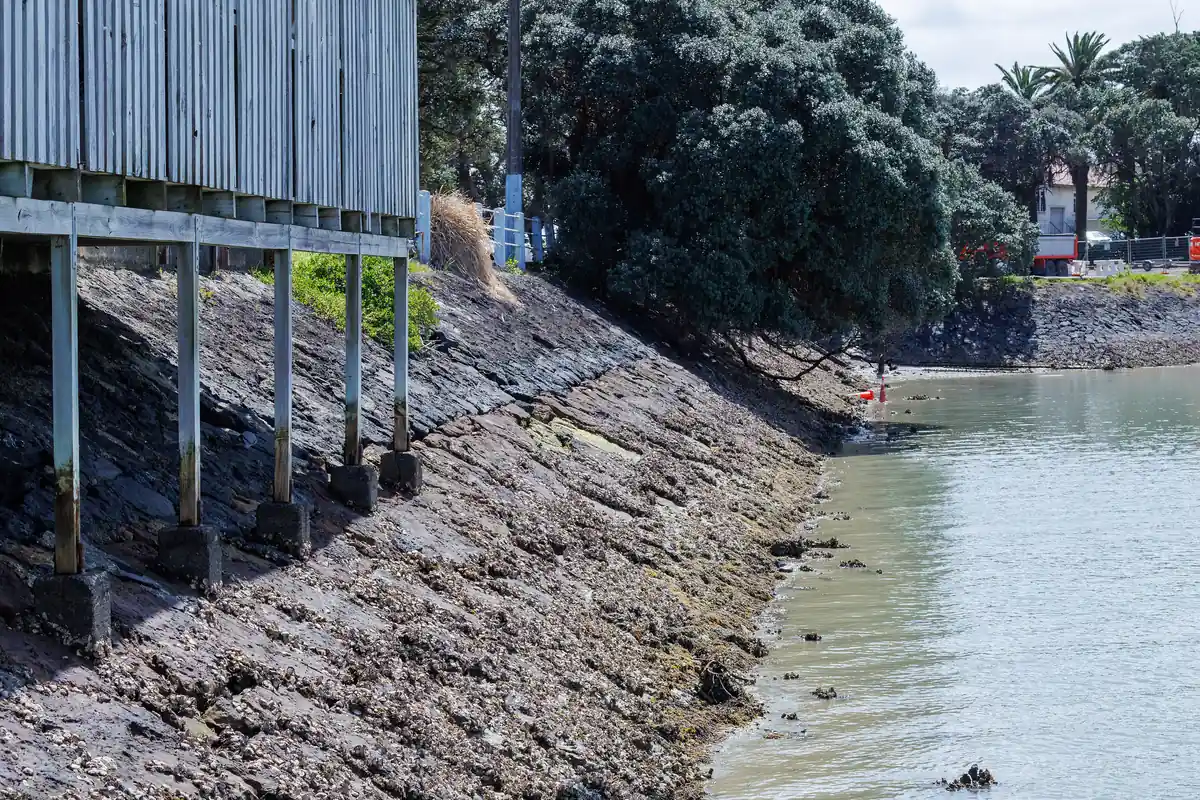
O’Neill’s Point and the 1910 subdivision
The North Shore Heritage review says the Bayswater peninsula, once called O’Neill’s Point, was subdivided in 1910, and grew with the wharf, the ferry and a steam tram along Bayswater Avenue. Eastern Bayswater was still farmland in 1935, so much of the suburb is younger than its early street layout suggests.
So the oldest houses here are early twentieth-century bungalows and cottages, not Victorian villas, and most of the suburb is later again.
State housing streets and Navy houses
The review names Bardia Street, Philomel Crescent, Diomede Street, Leander Road and Plymouth Crescent among the state housing streets of eastern Bayswater. After the Second World War, Navy housing of solid timber went up on large sections in Philomel Crescent, Portsmouth Road, Plymouth Crescent and Roberts Road.
Its companion volume notes that until the early 1960s, North Shore state housing was concentrated around Belmont, Northcote Central and Birkdale. Belmont’s streets reflect that: bungalows, state houses and post-war homes.
What these houses need
Solid timber and simple forms make for quick finish coats, but decades of paint have built up. Expect cracking at board ends and sills, old putty to check on original windows, and gaps where boards have shrunk. Large sections help: there is room for sheeting and ladders.
- Gentle wash, mould treatment on shaded walls.
- Wet scraping of loose paint at ends, edges and sills.
- Putty and glazing checked on original windows.
- Spot-prime bare timber, then two finish coats.

Water on three sides
The review describes Bayswater as one of the peninsula fingers on the deeply indented west-facing coast of the Devonport peninsula. With water so close on several sides, many sections are near the harbour, and the boatsheds and sea wall at the end of the point face it directly. NZS 3604 sea-spray zoning is still decided site by site, as the MBIE determination makes clear.
For houses near the shore, washing salt off sheltered walls once a year, and more often on exposed sites, keeps paint going. Coastal homes and salt explains.
Price bands
Plain post-war timber houses usually fall in the published band for 1960s to 1980s weatherboard, about $9,000 to $15,000 for the exterior. Older bungalows with more trim, or houses with long-neglected boards, move toward the higher figures. Interiors follow the per-room ranges.
Post-war is still lead-era
State and Navy houses from the 1940s and 50s fall well inside WorkSafe’s 1980s-or-earlier presumption for lead-based paint. That shapes every repaint here: wet methods, sheeting and careful disposal. Houses built before 2000 may also have fibre-cement soffits, checked before any sanding.
Lead paint in older homes and asbestos and textured ceilings.
Along the peninsula
Devonport, at the end of the same peninsula, has the older villa and cottage stock, while Takapuna, to the north, mixes everything from remnant villas and state houses to new beachfront homes. Both have their own pages describing what that means for a repaint.
Large post-war sections in Bayswater often carry later additions, garages and sleep-outs in other claddings. A quote should list each building separately, because a fibre-cement garage or a newer plaster extension needs a different primer from the original solid timber house.
Navy and state houses were often built to a handful of standard plans, so neighbours’ houses can look alike. Their condition rarely is: one may have been repainted every eight years and another left for twenty. Board ends and sills tell the story quickly on the site visit.
Asked before a repaint
- What were the Navy houses in Bayswater built from?
- The North Shore Heritage review says Navy housing built after the Second World War in Philomel Crescent, Portsmouth Road, Plymouth Crescent and Roberts Road was solid timber on large sections. They are robust houses, now carrying many decades of paint.
- Are Bayswater houses close enough to the sea for salt damage?
- Some are. Bayswater is a narrow peninsula in the harbour, so many sections are near the water. Whether a particular house is in the NZS 3604 sea-spray zone depends on its own distance and setting, decided site by site.
- How much does it cost to repaint a post-war state house?
- Published Auckland ranges for 1960s to 1980s weatherboard houses run about $9,000 to $15,000 for the exterior, and earlier post-war houses fall in a similar band. Board condition and lead-safe prep move the figure most.
Sources
- Auckland Council: North Shore Heritage thematic review, Devonport and Takapuna (PDF)
- Auckland Council: North Shore Heritage thematic review, Northcote, Birkenhead and Beach Haven (PDF)
- MBIE Determination 2019/039: NZS 3604 exposure zones (PDF)
- WorkSafe: managing lead-based paint
- WorkSafe: asbestos in the home
The rest of the city gets the same prep-first approach; see house painters in Auckland for the overview.
Ask us for a painting quote
Tell us about the house and the job. We reply with questions, or a day to walk around it with you.