Painting brick, plaster and roughcast
Brick, plaster, roughcast and concrete block are repainted with masonry systems, not the paints used on weatherboards, and the prep is about moisture and cracks rather than flaking timber. Published Auckland rates for these surfaces run from about $25 to $100 per m². The first question on a brick house is whether to paint it at all. See exterior house painting for the full process.
To paint brick, or leave it
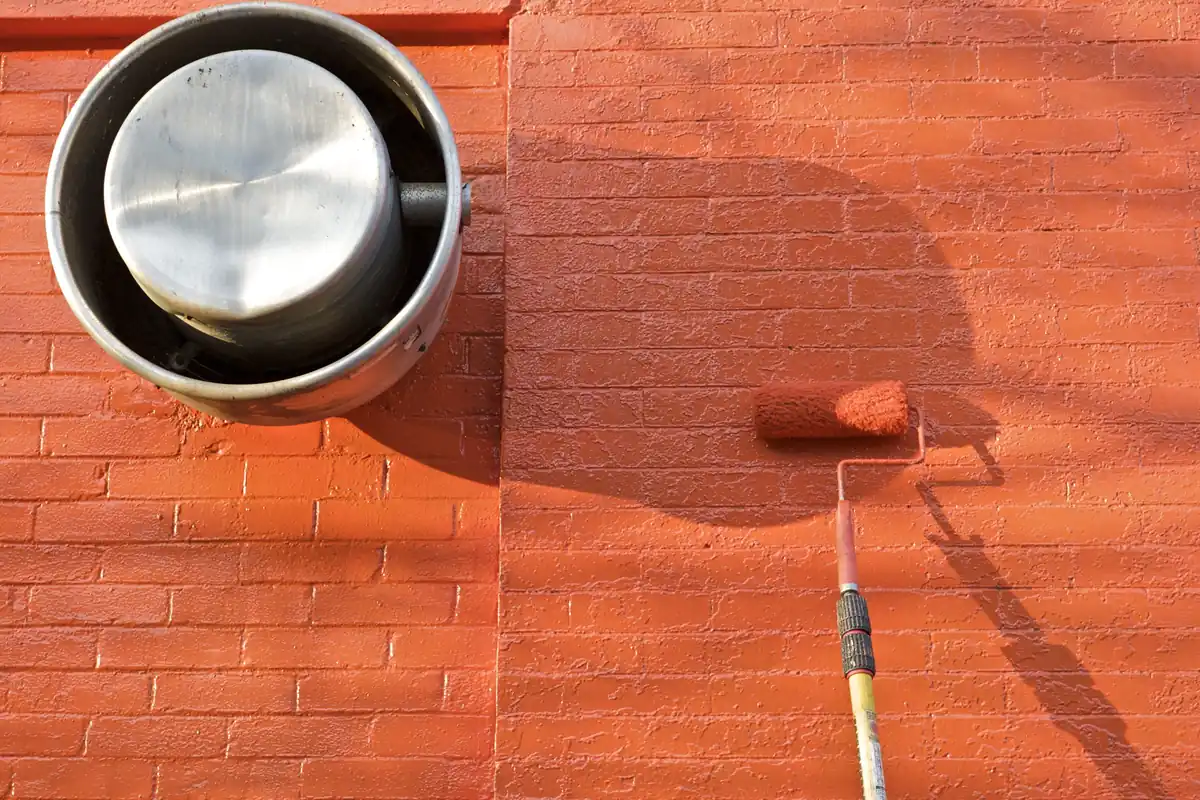
Unpainted clay brick is one of the lowest-maintenance claddings there is, and painting it commits you to repainting every decade or so. Paint is worth it where brick is already painted, badly stained, patched in mismatched brick, or simply not the look you want. If you paint, use a breathable masonry paint so moisture in the wall can still escape.
Many Auckland brick-and-tile houses from the 1960s and 70s only need their trim painted: eaves, fascias, barge boards, gables and joinery. That is a much smaller job, and published ranges for it run from about $3,500 to $6,500. Painting the brick itself adds considerably.
White salts and damp patches
A white, powdery bloom on brick, block or plaster is efflorescence: salts left behind as water dries out of the wall. It tells you water is moving through the masonry. Paint over it and the salts keep coming, pushing the coating off. The cause comes first, then a dry brush-off, then time to dry.
- Check gutters, downpipes and ground levels against the wall.
- Look for leaking taps, sprinklers or gardens heaped against the base.
- Brush salts off dry; do not wash them back into the wall.
- Wait until the wall stays clear after rain before sealing and painting.
Plaster and cracks
Hairline cracks in solid plaster are common and are filled with a flexible filler before painting. Wider cracks, cracks that reopen, stepped cracks in brick or block, and any sign of water behind cladding are a building question rather than a painting one. A painter should point them out, not hide them under a thick coat.
Monolithic sheet and plaster claddings from the 1990s and 2000s need special care. A painter repaints them to the cladding maker’s coating system and leaves control joints and flashings working. If there are signs of moisture getting in, a building surveyor looks first; paint is not a repair for a leaking wall.
Roughcast and textured finishes
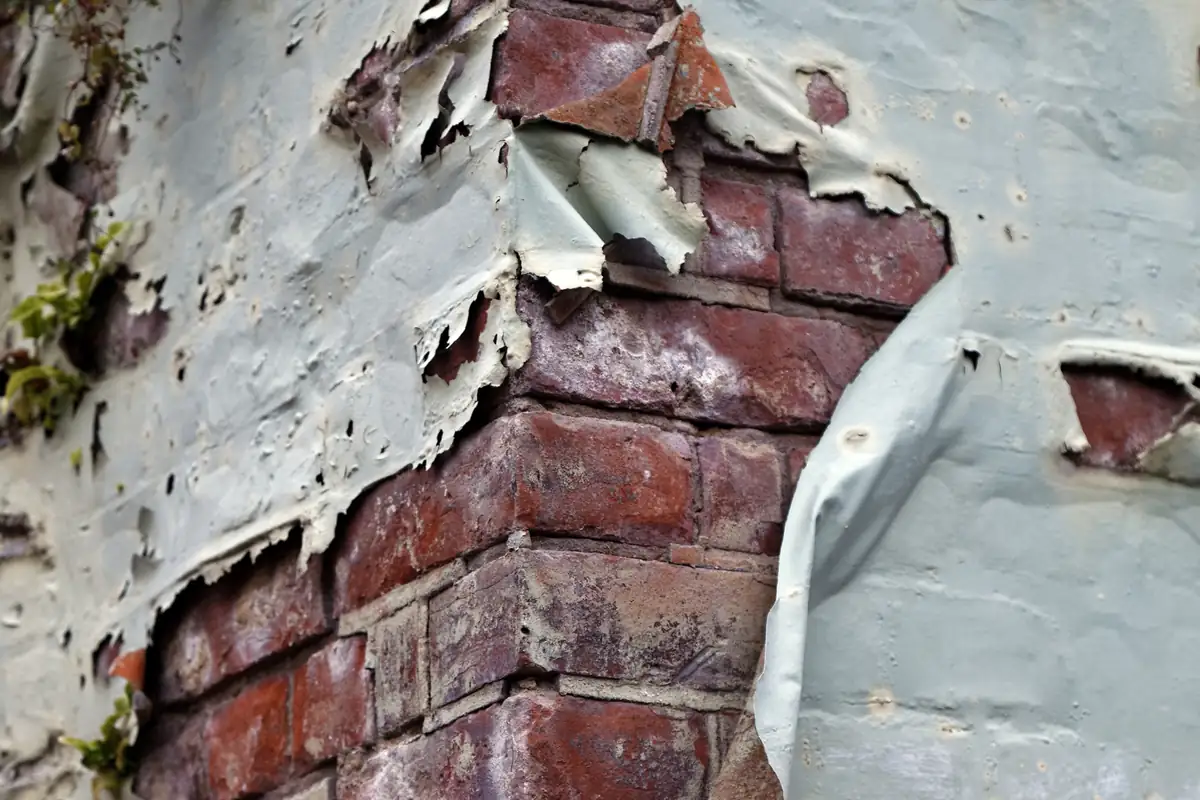
Roughcast takes more paint and more time than smooth plaster, because the coating has to reach every hollow in the texture. Resene’s trade guide puts coarse roughcast at about $55 per m² before GST, against about $30 for smooth plaster or blockwork. Thick-nap rollers and brushing in are the usual tools.
On older textured finishes, the question of what they are made of comes before the paint. Some textured coatings and patching compounds in houses built before 2000 can contain asbestos. They are not sanded or scraped until they have been checked. Asbestos and textured surfaces covers what that means.
The paint system for masonry
A typical masonry repaint is a gentle wash, any mould treatment, crack filling, a sealer or primer where the surface is chalky, porous or patched, then two finish coats of an exterior acrylic made for masonry. Bare cement surfaces are alkaline, so new patches need a primer that can cope with that.
- Wash with a brush and low-pressure water; no hard water blasting.
- Treat mould and rinse, keeping run-off out of drains.
- Fill cracks with a flexible exterior filler.
- Seal or prime chalky, porous or patched areas.
- Two finish coats of exterior masonry acrylic.
Primers and undercoats explains the sealer step.
Concrete block and painted concrete
Concrete blockwork is porous and often slightly damp at the base, so it needs a sealer and a paint that breathes. Resene’s trade guide puts repainting blockwork at about $30 per m² before GST. Painted concrete retaining walls and foundations follow the same rules, with extra attention to water coming through from behind.
Garage walls, block fences and retaining walls are often quoted separately from the house. Fence painting is not covered on this site, but block walls that are part of the house usually are.
Old paint on brick and plaster
Lead was used in paint on masonry as well as timber. In a house from the 1980s or earlier, WorkSafe advises presuming any old paint layer may contain lead, so painted brick and plaster are prepared wet, with chips and dust caught and bagged. Abrasive blasting is not recommended for stripping old paint from houses.
See lead paint in older homes for the full set of methods.
Asked before a repaint
- Should I paint my brick house?
- Only if you are happy to keep painting it. Unpainted clay brick needs almost no upkeep, and once painted it joins the repaint cycle. Painting can make sense for mismatched or stained brick, or brick already painted. The brick must be dry and free of salts first, and the paint should be a breathable masonry system.
- What is the white powder on my brick or plaster?
- Usually efflorescence: salts carried to the surface by water moving through the masonry and left behind when it dries. It is a sign of moisture. Brush it off dry, find and fix where the water is coming from, and let the wall dry out before any sealer or paint goes on.
- How much does it cost to paint a plaster or brick house?
- Published Auckland rates for plaster, brick and roughcast run from about $25 to $100 per square metre of wall. Smooth plaster and blockwork sit at the low end, coarse roughcast at the high end. A brick-and-tile house where only the trim is painted has been published at $3,500 to $6,500.
- Can you water blast plaster before painting?
- Not hard. BRANZ advises against water blasting modified cement plaster and soft claddings such as acrylic plaster, because it damages them and drives water in. A gentle wash with a brush and low-pressure water does the job, and Auckland Council rules keep the wash water out of stormwater drains.
Sources
For the whole picture, from prep to the last coat, go back to house painters in Auckland.
Ask us for a painting quote
Tell us about the house and the job. We reply with questions, or a day to walk around it with you.