Painting doors, windows and trim
Doors, window frames, sills and trim take more of a painter’s time than walls, and they fail first. They are painted with harder enamels, by brush, after careful sanding and filling. Resene’s trade guide puts an interior flush door with its frame at about $140 each before GST. This page covers inside and out; the exterior and interior pages cover the rest of the house.
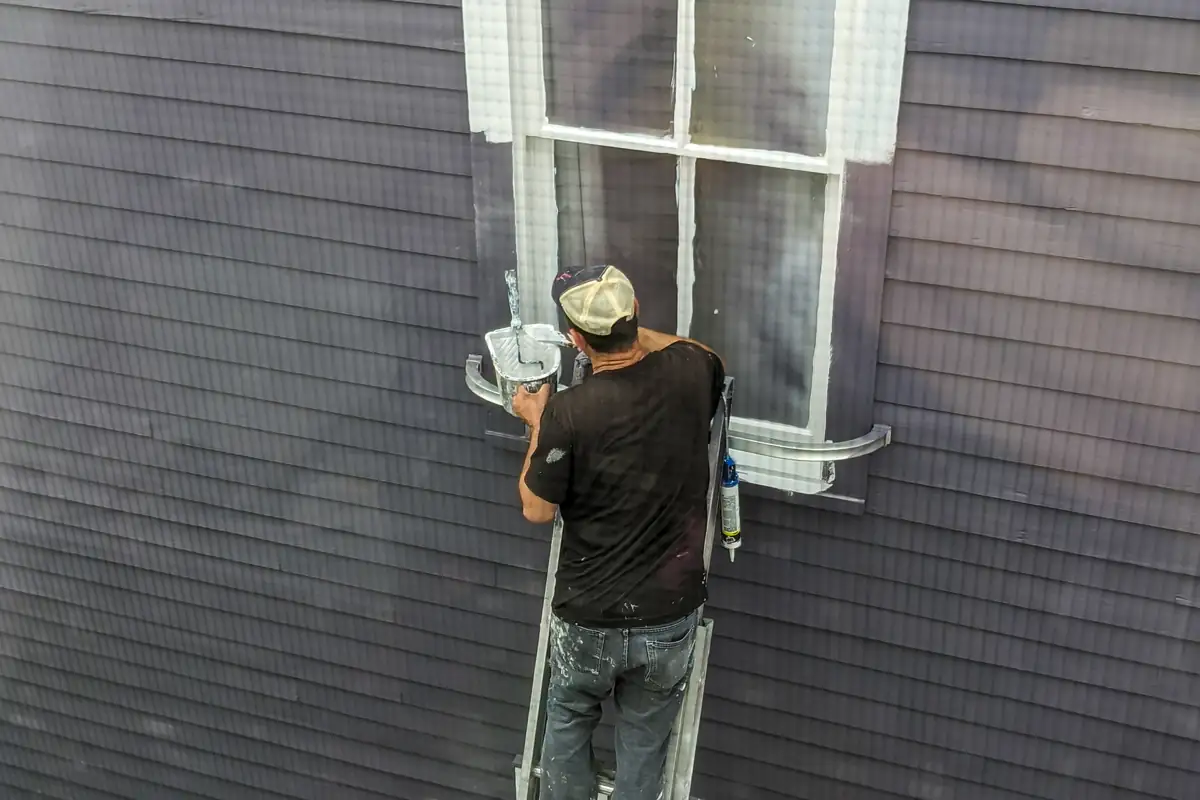
Why joinery and trim fail first
Joinery has the most edges and end grain on a house, and edges are where paint is thinnest. Sills and the bottom rails of windows hold water; doors take knocks and hands. Resene gives acrylic on window sills a life of 5 to 7 years, shorter than the 7 to 10 years it gives the walls of a weatherboard house.
That is why many owners repaint the windows and sills once between full repaints. Catching a cracked sill early is a sand, prime and two coats; leaving it means filling rot or replacing timber.
Enamel or acrylic for trim
Trim and doors are painted in an enamel: a harder, more washable finish in semi-gloss or gloss. Waterborne acrylic enamels are now common inside because they dry faster, smell less and stay whiter. Solvent-borne enamels still level out very smoothly and are used where an old oil finish is being kept.
Going from an old oil finish to acrylic needs a light sand and a primer that bonds to oil paint, or the new coat can peel. Acrylic or oil-based paint explains how to tell which you have.
Exterior windows, sashes and sills
Old timber windows are prepared slowly: loose paint scraped back, cracked putty cut out and replaced, bare timber primed, sills filled where needed, then an undercoat and two finish coats. Paint is run slightly onto the glass to seal the putty line. Sashes are kept free so they still open.
- Glazing putty must be firm before it is painted; new putty needs time to skin over.
- Sill ends and joints are filled and sealed, because water gets in there first.
- Hardware is removed or masked, not painted over.
- Sashes are moved while drying so they do not stick shut.
If rot has gone deep into a sill or the bottom rail of a sash, the painter will say so. Splicing in new timber is joinery work and is quoted separately.

Front doors
A front door is the one place a strong colour is easy to live with. It is also the most handled surface on the house, so it needs a hard enamel and careful prep. Panelled doors are painted in a set order, panels first and stiles last, so the brush marks run with the grain.
Colour choice for the front door usually follows the roof and joinery colours. Choosing exterior colours has a simple method, and white exterior colours covers trim whites.
Skirtings, architraves and interior doors
Interior trim is cleaned to remove grease, lightly sanded so the new coat grips, filled where knocked, then given one or two coats of enamel. Doors are best taken off or wedged open and painted on both faces and all edges, because an unpainted top or bottom edge lets moisture in and the door can swell.
In villas, deep skirtings, picture rails and four-panel doors make the trim a large part of the interior price. In newer houses with flush doors and simple trim, it is quicker.
Old joinery and lead paint
Windows and doors on older houses carry the oldest paint layers, and Health NZ notes that paints until 1965 often had high lead levels. Friction surfaces like sash runners and door edges can wear old paint into dust. Prep is done wet, with chemical stripping a recognised option for small areas such as window frames, and no open flame.
If you are unsure, a test kit from a paint or hardware store shows whether lead is present. Testing for lead paint explains the options, and lead paint in older homes covers the methods.
What doors and windows add to a price
Joinery is slow work, so it is often the biggest single item after prep on a villa. The trade guide figure of about $140 for a flush door and frame gives a sense of scale. Multi-pane windows, panelled doors and joinery that needs a strip all cost more. On a repaint quote, look for windows and doors as their own lines.
The cost guide and interior costs give the wider ranges.
Asked before a repaint
- What paint is best for interior doors and trim?
- A hard-wearing enamel, either a waterborne acrylic enamel or a solvent-borne one, in semi-gloss or gloss. Doors, skirtings and architraves take knocks and hand marks, so they need a tougher, more washable finish than walls. If the old trim is oil-based, it needs a light sand and the right primer before acrylic goes over it.
- Why do my window sills peel first?
- Water sits on them longest and the sun hits them hardest. Resene gives acrylic paint on sills a shorter life, 5 to 7 years, than on walls. End grain at the sill corners soaks up water, and cracks in old putty let it in behind the paint. Sills usually need attention between full repaints.
- Can sash windows be painted without sticking?
- Yes, if they are prepared and painted with care. The painter cleans and lightly sands the running edges, keeps paint off the parts that slide, and moves the sashes while the paint is drying. Sashes painted shut over the years can be freed, though sometimes that is a joinery job.
- How much does it cost to paint a door?
- Resene’s trade guide puts an interior flush door including its frame at about $140 each before GST. Panelled doors, front doors with glazing and doors needing a strip cost more. Most painters include doors in a room or house price, so ask how they are counted.
Sources
For the whole picture, from prep to the last coat, go back to house painters in Auckland.
Ask us for a painting quote
Tell us about the house and the job. We reply with questions, or a day to walk around it with you.