House painting in Ponsonby
Ponsonby is one of Auckland’s first suburbs: small timber cottages and villas packed onto narrow lots along hilly streets either side of a ridge. Nearly all are weatherboard with timber detail, almost all carry well over a century of paint, and the space between houses is often a metre or two. That makes access and lead-safe prep the core of a repaint. See heritage and character homes.
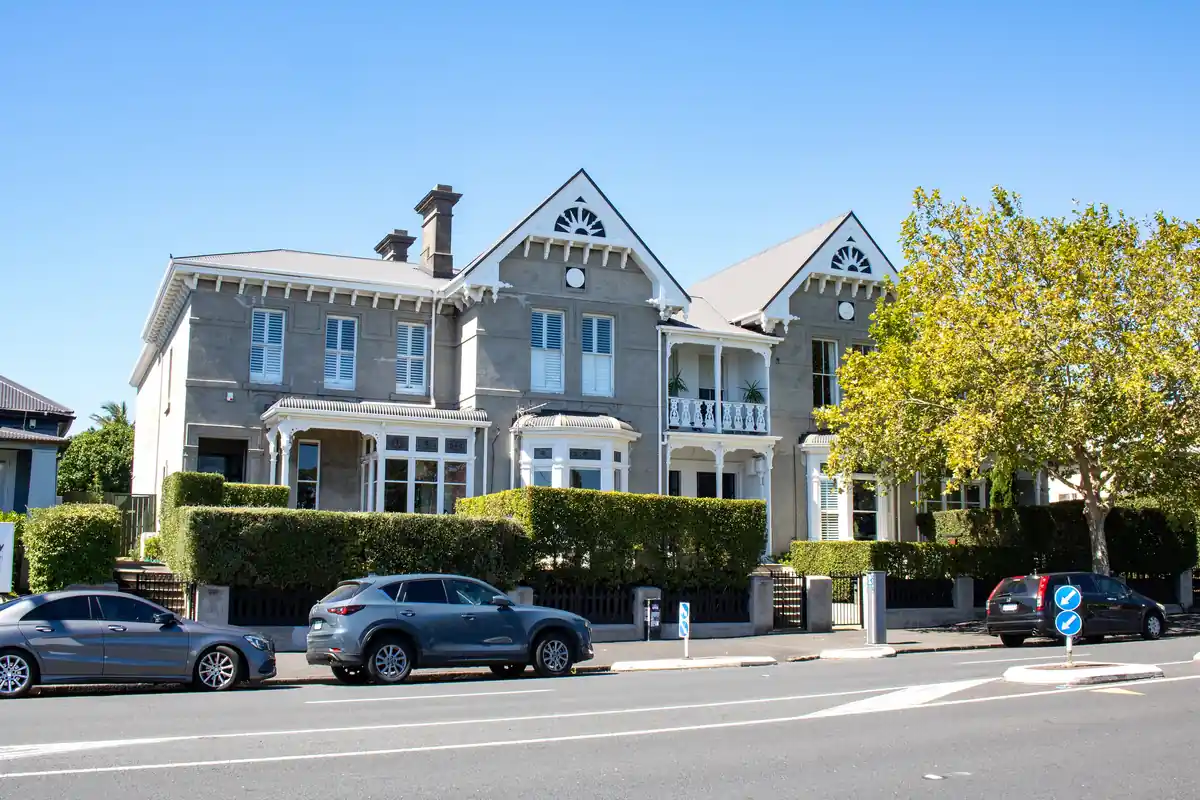
A Victorian walking suburb
Council’s special character statement calls Ponsonby an early and important example of a Victorian walking suburb, close enough to the city for workers to walk to work, with subdivision either side of Ponsonby Road from the 1860s. Early houses were small and closely spaced on narrow, hilly streets.
Cottages of one and two storeys from that period still line many streets, and later villas filled the gaps.
What the council survey found, street by street
The 2021 survey describes three areas. Ponsonby North has cottages from the 1860s to 1880s and villas from the 1880s to 1910s on lots of about 275 to 450 m², with bungalows along Provost Street. In Ponsonby Central, angled boundaries on O’Neill and Summer Streets set houses at an angle to the street, a sawtooth effect.
| Area | Score | Notes |
|---|---|---|
| Ponsonby North | 89% | Cottages and villas; lots about 275 to 450 m² |
| Ponsonby Central | 85% | Sawtooth frontages on O’Neill and Summer Streets |
| Ponsonby South | 83% | Includes Vermont Street, once large lots |
Tight lots and garages dug in below
All three survey reports note that densely spaced housing means some houses have a small carport or garage in front or excavated below. For a painter, that means front walls reached over a carport roof, side walls in narrow passages, and nowhere to put a skip. Sheeting has to be fitted to the space, and neighbours’ walls and windows protected.
- Side passages: narrow ladders or platforms, sheeting to the boundary.
- Carports and dug-in garages: planned access to the front wall.
- Neighbours: agreement if ladders or sheeting need their land.
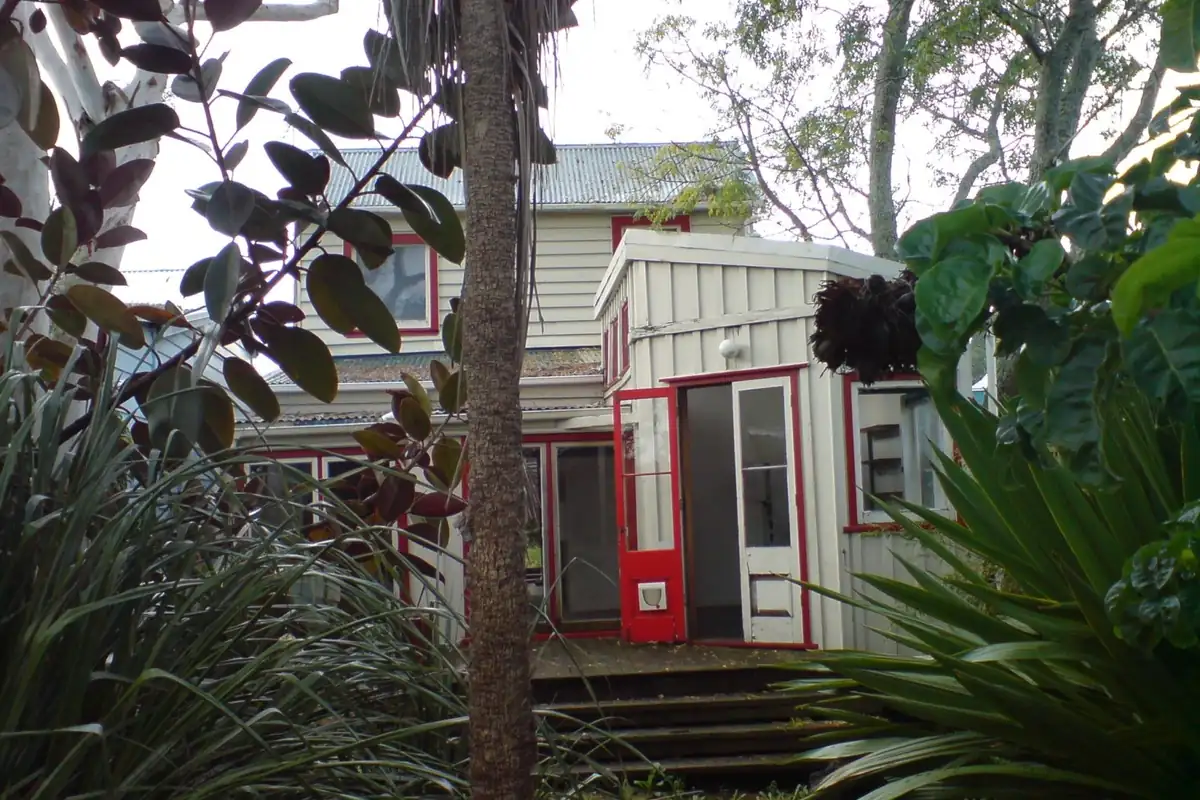
Timber detail on cottages and villas
Across this part of the isthmus, the statements describe weatherboard walls, double-hung sash windows and verandahs with decorative balustrades, posts and friezes, mostly under corrugated iron. On a Ponsonby villa those details can take as long as the walls. They are scraped and brushed by hand, never water blasted.
Doors, windows and trim covers sashes.
The ridge and its exposure
Ponsonby Road follows a ridge with views to the city, the harbour and the Waitākere Ranges, and some substantial 1890s houses were built along it for those views. Ridge-top walls catch more sun and wind than houses down in the gullies, so north and west faces usually show wear first.
How long exterior paint lasts explains why one wall fails before the others.
What it costs
Published Auckland ranges put a single-storey villa at roughly $12,000 to $20,000 or more and a two-storey villa at $20,000 to $30,000 or more. Ponsonby cottages are smaller, but tight access and lead-safe prep keep the hours up, so per square metre they often cost more than a suburban house.
The oldest paint in the city
A Ponsonby cottage from the 1870s carries some of the oldest paint layers in Auckland. WorkSafe advises presuming lead-based paint in buildings from the 1980s or earlier; here, assume the lower layers are lead and plan wet scraping, collected chips and a tight-site clean-up that keeps dust off neighbours’ gardens.
Lead paint in older homes; Grey Lynn next door has a similar story.
Asked before a repaint
- Why is painting a Ponsonby cottage slow work?
- Small lots and close neighbours leave little room for ladders and sheeting, the houses carry well over a century of paint presumed to contain lead, and the detail on cottages and villas is brushed by hand. The time goes into access and prep rather than the finish coats.
- Do I need my neighbour’s permission to paint a boundary wall?
- If the painter needs to stand or place ladders on the neighbour’s land, yes, you need their agreement. On Ponsonby’s tight lots that is common, so it is worth talking to neighbours before the start date.
- Are Ponsonby houses still original?
- Largely. Council’s 2021 survey scored 83% to 89% of properties in Ponsonby’s north, central and south areas at the top two grades, which it treats as high quality, and notes that houses tend to keep a high degree of physical integrity.
Sources
The rest of the city gets the same prep-first approach; see house painters in Auckland for the overview.
Ask us for a painting quote
Tell us about the house and the job. We reply with questions, or a day to walk around it with you.