House painting in Devonport
Devonport holds the North Shore’s densest run of old timber houses: cottages and villas through the south of the peninsula, bungalows and early state houses further north around Narrow Neck. Almost all are weatherboard under corrugated iron, many carry well over a century of paint, and plenty sit within sight of the sea. Repainting one is careful, slow work, and villa and weatherboard painting describes the method.
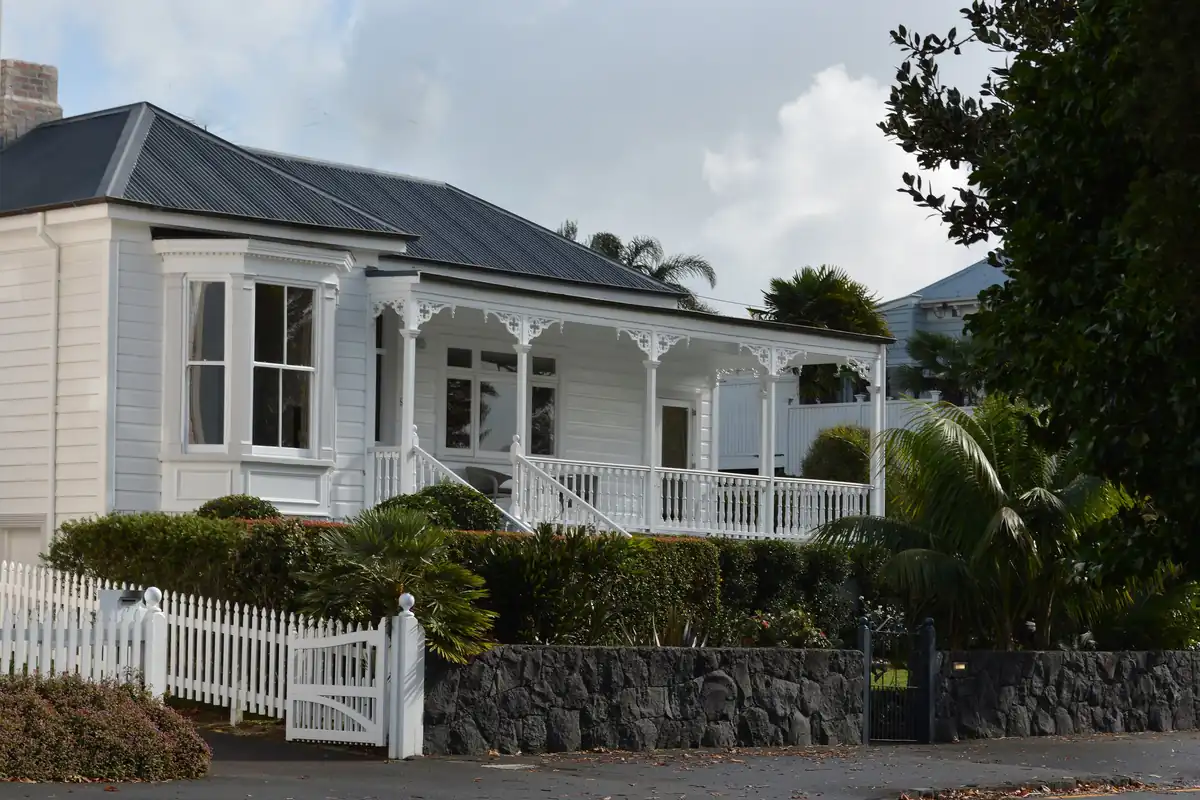
A peninsula of houses from 1870 to 1940
Council’s special character statement for Devonport and Stanley Point says most of the buildings that give the area its character went up between 1870 and 1940. The North Shore Heritage review places cottages and villas mainly in Devonport south, with bungalows, state houses and post-war homes in the later-settled north, around Narrow Neck.
The same review records the North Shore’s first state house, opened at 27 Niccol Avenue in September 1938. So a single walk from the ferry to Narrow Neck passes Victorian cottages, Edwardian villas, 1920s bungalows and 1940s state houses, each with its own paint history.
Weatherboard, sash windows and verandah fretwork
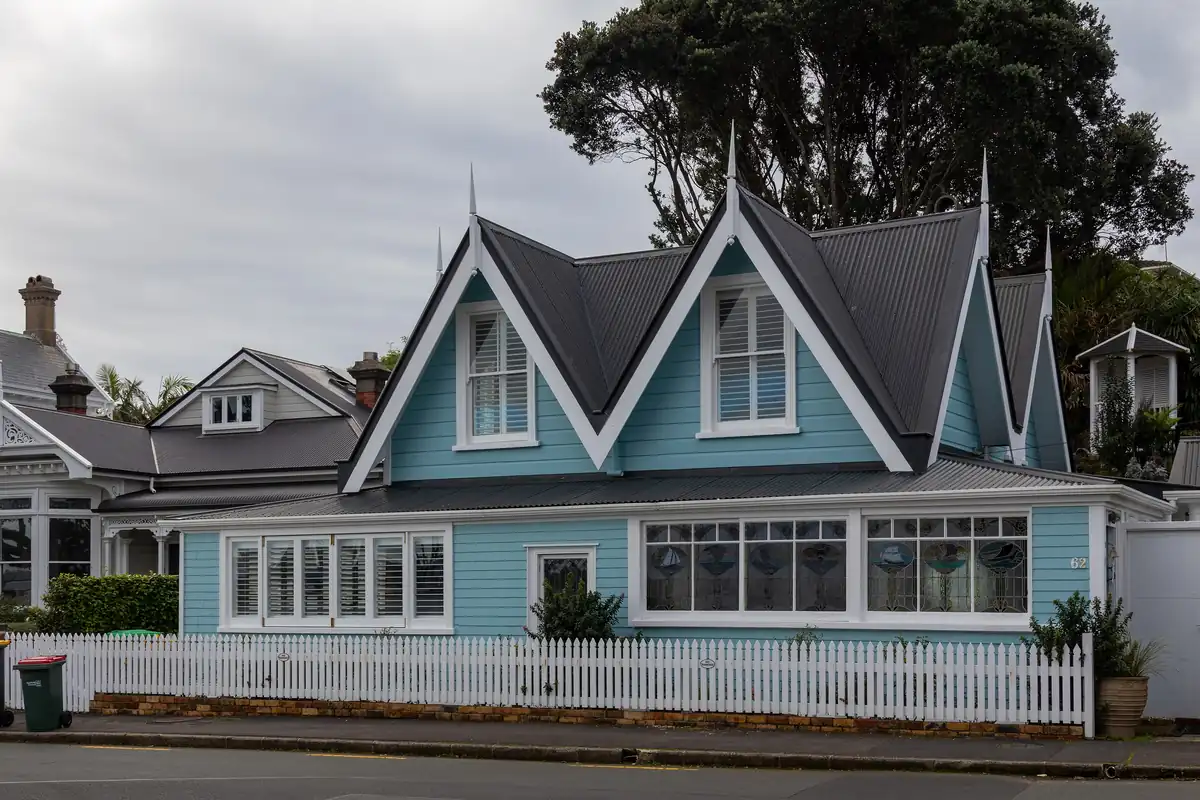
The statement describes houses typically timber-framed and weatherboard clad, with timber joinery and gabled or hipped corrugated iron roofs, plus a few brick or rendered houses. On a Devonport villa the paint hours sit in the detail: bay windows, brackets, finials, turned posts and double-hung sashes, all scraped and brushed by hand rather than rolled.
- Sashes are kept free so they still slide once painted.
- Fretwork is hand scraped; water blasting is never used on it.
- The odd brick or plastered house gets a masonry system instead.
How intact the streets are
Council’s 2022 character survey scored 69% of Devonport properties at the top two grades, with sub-areas higher: 86% in Stanley Point East. Narrow Neck came in at 54%, with villas, transitional villas and bungalows its commonest styles. High scores mean original weatherboards, joinery and detail survive in numbers.
That matters for a repaint, because original timber rewards careful prep and punishes shortcuts. Replacing a run of rotten boards is joinery, not painting, and is pointed out and quoted separately.
Gulf on one side, harbour on the other
Narrow Neck and Cheltenham Beach face Rangitoto and the Hauraki Gulf; the southern shore runs from North Head round to Stanley Point, looking at the city. Stanley Point itself is elevated and falls to the sea around its edge. Under NZS 3604, land within 500 m of the sea is likely to be a high-risk sea-spray zone, but an MBIE determination shows that is settled house by house, not for the peninsula.
Practically, the seaward walls, verandah ceilings and sills of waterfront houses wear first, because salt sits where rain cannot rinse it. A yearly gentle wash of those sheltered surfaces does more than a premium paint. Coastal homes and salt goes further.
What moves a Devonport price
Published Auckland ranges put a single-storey villa or bungalow exterior at about $12,000 to $20,000 or more, and a two-storey villa at $20,000 to $30,000 or more. Devonport houses tend to sit in those bands rather than the cheaper plain-house figures, because of detail, lead-safe prep and the occasional board repair.
Narrow streets and parked cars around the village can make access and staging part of the plan. Costs by house type compares villas with other Auckland houses.
Old paint on the oldest houses
Nearly every house here predates 1980, and WorkSafe advises presuming lead-based paint on anything from the 1980s or earlier. On cottages a century old, the bottom layers almost certainly are. Prep is done wet, sheeting runs out past the garden beds, chips are bagged daily, and nothing is burned off.
Lead paint in older homes and heritage and character homes cover the methods and the heritage rules.
Nearby
Devonport shares its later state housing story with Bayswater and Belmont, further along the same peninsula, and its villa stock with Northcote Point across Shoal Bay. Both neighbours have their own pages, because the mix of house ages, the exposure and the access on their streets differ from Devonport’s in ways that change a quote.
Inside, Devonport villas bring their own work: high studs, picture rails, deep skirtings and four-panel doors, often under several layers of old enamel. Interior repaints here are usually priced room by room after a walk-through, and the hall, which sets the tone for the house, is often done first.
See Bayswater and Belmont and Northcote.
Asked before a repaint
- Is Devonport a special character area?
- Yes. Devonport and Stanley Point sit in the special character areas overlay of the Auckland Unitary Plan, which values the area’s 1870 to 1940 timber houses. That is separate from the heritage schedule: an individual house may also be a scheduled historic heritage place, with its own rules for maintenance methods.
- Why does a Devonport villa cost more to repaint than a newer house?
- Detail, age and exposure. Fretwork, sash windows, bay fronts and verandahs are brushed by hand, the lower paint layers are presumed to contain lead, and waterfront walls take salt. Published Auckland ranges put a single-storey villa exterior at roughly $12,000 to $20,000 or more.
- When is the best time to repaint a house near Cheltenham Beach?
- Late spring through autumn gives the most dry days, but on exposed Gulf-facing walls the wind matters as much as rain. Many owners book early in spring, because painters’ diaries fill from September.
Sources
- Auckland Unitary Plan Schedule 15: special character statements (PDF)
- Auckland Council: PC120 special character findings, North (PDF)
- Auckland Council: North Shore Heritage thematic review, Devonport and Takapuna (PDF)
- MBIE Determination 2019/039: NZS 3604 exposure zones (PDF)
- WorkSafe: managing lead-based paint
The rest of the city gets the same prep-first approach; see Eggshell & Co Painting for the overview.
Ask us for a painting quote
Tell us about the house and the job. We reply with questions, or a day to walk around it with you.