House painting in Beach Haven and Birkdale
Beach Haven and Birkdale were fruit-growing country until 1959. When the Harbour Bridge opened, orchards became subdivisions, and most houses here date from the 1960s and 70s, with a scattering of small 1920s bungalows from an older estate. Plain timber houses on sloping sections above the upper harbour are the usual job. See exterior house painting for the process.
Orchards to suburbs after 1959
The North Shore Heritage review says Birkdale and Beach Haven were mainly fruit-growing areas until the Harbour Bridge opened in 1959, after which numerous orchards were subdivided for housing. By the 1970s, about 15,000 people lived in the new subdivisions.
It records orchard land from Levesque Street to Kaipātiki Creek developed by a group-home company in the 1960s, a 1961 Parade of Homes in Levesque Street showing low-cost modern housing, and Doris Street among the first areas cleared for state housing.
Four-roomed bungalows from 1923
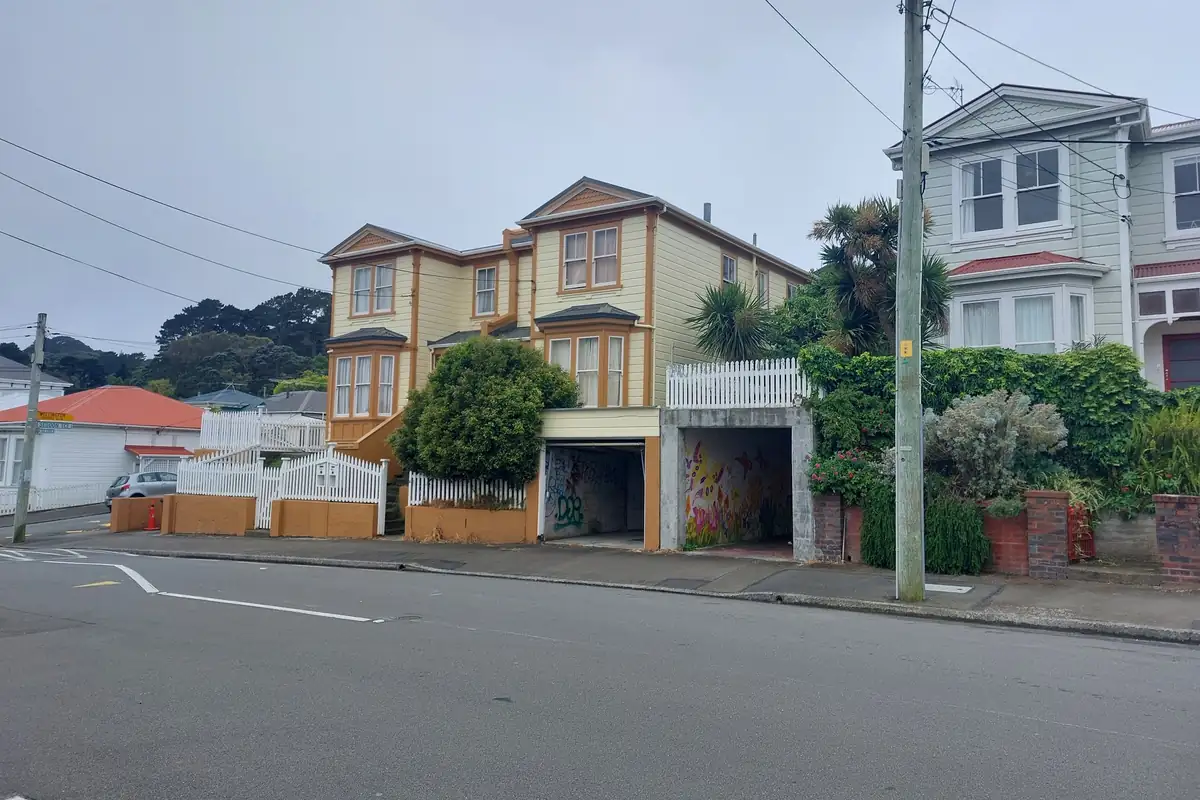
The review says the Beach Haven Estate was offered for sale in 1923, and its 1920s bungalows were typically modest four-roomed houses with small verandahs and little decoration. Those that survive are about a century old and are among the oldest houses in the area.
Simple trim keeps the hours down, but their lowest paint layers are among the oldest on this side of the harbour, and board ends and sills have had a century of weather.
Group-built and state houses
The review notes comparatively large numbers of Māori Affairs state houses in Beach Haven and Northcote from the 1960s. Like the group-built homes, most are single-storey timber with straightforward forms. Paint failure on them tends to follow a pattern: board ends, the bottom edges of weatherboards, sills, and walls shaded by trees.
- Original weatherboards: washed, wet-scraped where loose, spot-primed and given two coats.
- Extensions in other materials: prepared to suit, colour-matched to the original.
- Fibre-cement soffits on pre-2000 houses: checked before any sanding.
Upper harbour, bush gullies and shade
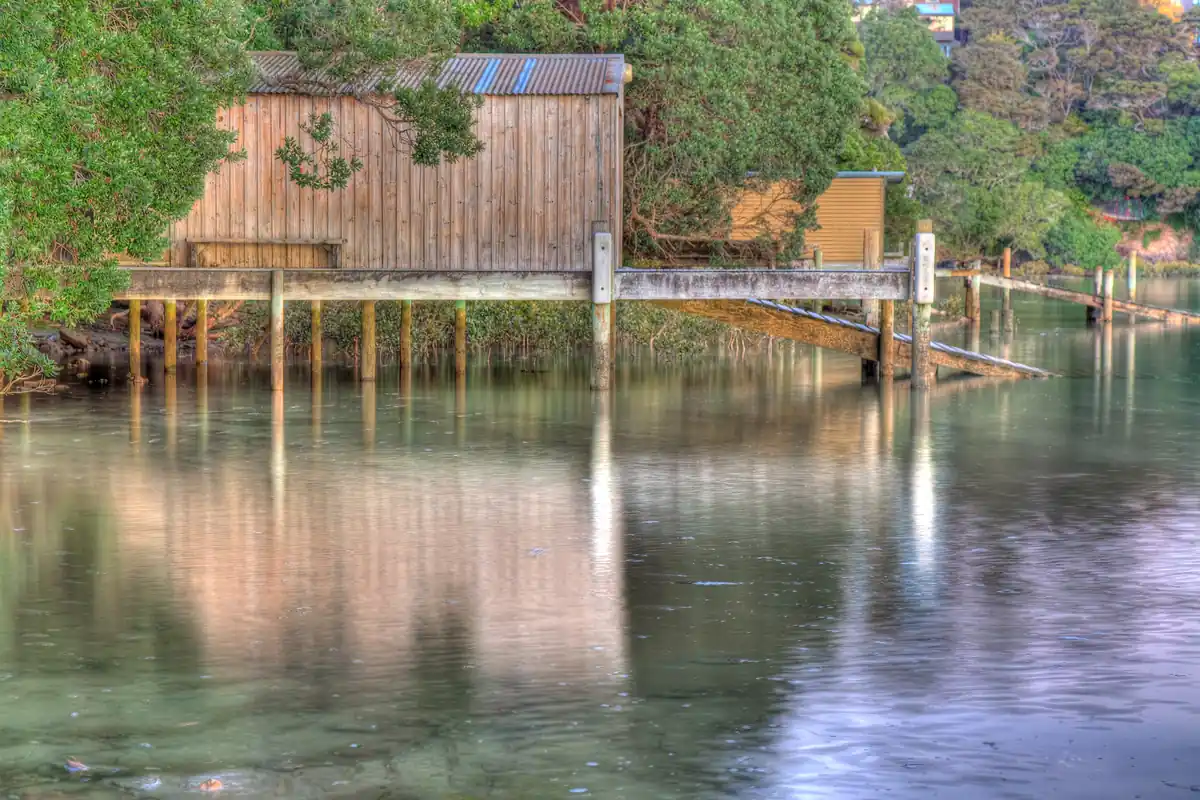
Beach Haven runs down to the upper Waitematā, with boatsheds and bush along the shore and gullies through the suburb. Sheltered water means less wind than the open coast, but bush-edge walls stay shaded and damp, which feeds mould and slows drying after washing.
Houses right on the water may still fall within the NZS 3604 sea-spray zone, which is decided site by site, as the MBIE determination shows. Mould before painting covers shaded walls.
Typical costs here
Plain 1960s and 70s houses sit in the published band of about $9,000 to $15,000 for an exterior repaint. The 1920s bungalows often come in lower for their size but need careful lead-safe prep. Split levels and two-storey extensions add access costs.
Old coats and older soffits
Both eras fall within WorkSafe’s presumption of lead-based paint for buildings from the 1980s or earlier, so prep is wet and chips are collected. Houses built before 2000 may have asbestos in fibre-cement soffits or claddings, which are tested before anything is sanded or water blasted.
See lead paint in older homes and asbestos and textured ceilings.
Neighbouring areas
Birkenhead and Northcote, to the east, hold the older villa stock on their points, while central Northcote shares Beach Haven’s 1960s state housing story. Each of those pages describes the local housing and what it means for preparation, access and price.
Kaipātiki Creek and the gullies that run toward it keep some back sections cool and green well into spring. On those sites the exterior season effectively starts later, and painters often begin with the sunnier street-facing walls.
See Birkenhead and Northcote.
Asked before a repaint
- When were most Beach Haven houses built?
- Mostly from the 1960s and 70s. The North Shore Heritage review says Birkdale and Beach Haven were largely orchards until the Harbour Bridge opened in 1959, and that by the 1970s about 15,000 people lived in the new subdivisions. A few modest 1920s bungalows from the Beach Haven Estate remain.
- Have many Beach Haven houses been extended?
- Plenty have, which is common for houses of this age. Extensions often use a different cladding from the original, so a repaint has to match colours across two materials, each with its own primer.
- What does a Beach Haven exterior repaint cost?
- Plain 1960s and 70s weatherboard houses usually fall in the published Auckland band of about $9,000 to $15,000 for the exterior. Smaller original bungalows can be less, extensions and two-storey sections more.
Sources
The rest of the city gets the same prep-first approach; see Eggshell & Co house painting for the overview.
Ask us for a painting quote
Tell us about the house and the job. We reply with questions, or a day to walk around it with you.