Testing for lead paint
The simplest answer is the house’s age: WorkSafe advises presuming lead-based paint in any building from the 1980s or earlier. A home test kit from a paint or hardware store shows whether lead is present in a sample; a laboratory test confirms it and gives an amount. Either way, the result decides how old paint is prepared, which is covered on lead paint in older homes.
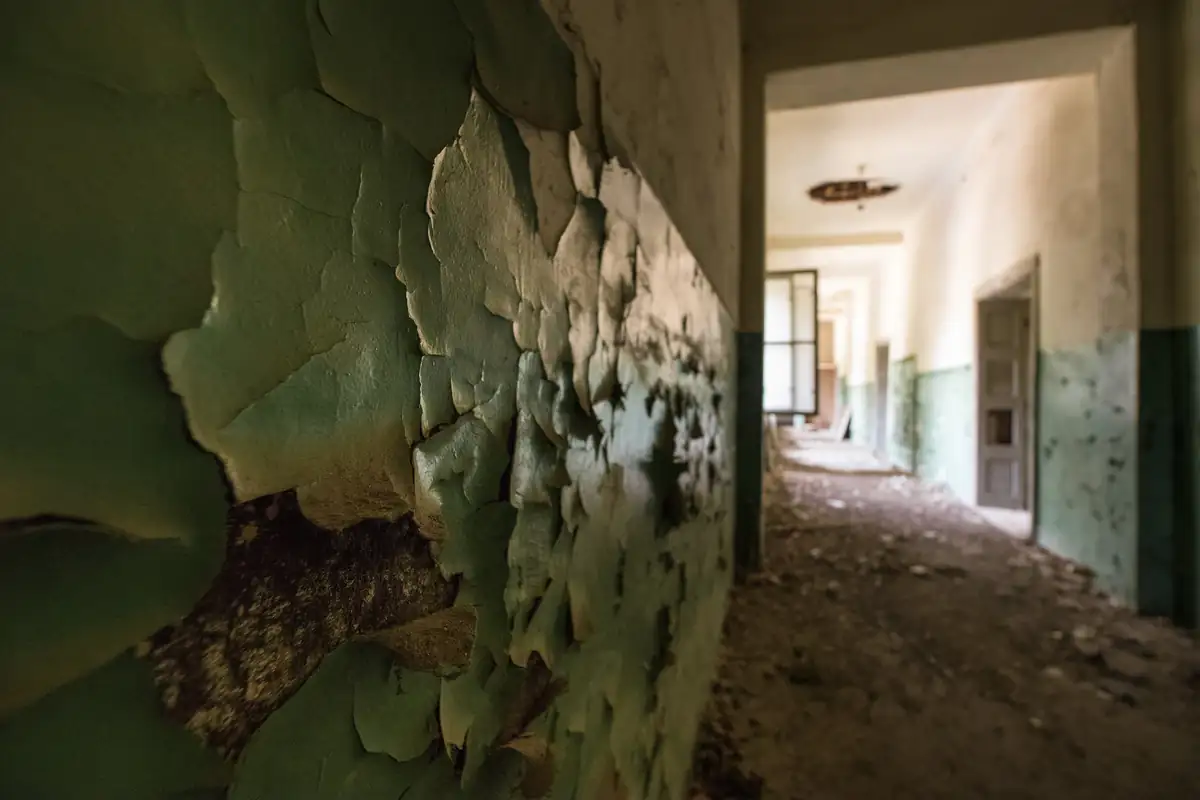
Start with the age of the house
WorkSafe and Health NZ both advise presuming lead-based paint in buildings from the 1980s or earlier. Health NZ adds that paints until 1965 often had high lead levels, especially before 1945, and that even a recently painted house may have lead in older layers underneath. BRANZ records that white lead was officially banned in 1979.
So for most villas, bungalows, state houses and 1960s and 70s homes, a test confirms what the age already suggests. Testing is most useful for houses from around 1980, for surfaces you are unsure about, or where a big decision such as a full strip depends on the answer.
Home test kits
The kits sold at paint and hardware stores, and some pharmacies, use a sodium sulphide solution that turns brown or black where lead is present. They are qualitative: they say yes or no, not how much. That is enough to decide whether a surface needs lead-safe preparation, which is most of what a homeowner needs to know.
- Test through every layer, not only the top coat.
- Test more than one surface: joinery, weatherboards and interior trim can differ.
- Follow the kit instructions for reading the colour change.
- Treat an unclear result as positive.
Laboratory analysis
A laboratory measures the amount of lead in paint flakes, which a kit cannot. That matters when you are deciding whether to strip a whole house, when a landlord or buyer wants a written result, or when a child’s blood test has raised concern. Health NZ’s National Public Health Service can advise on testing options locally.
Ask the laboratory how they want the sample taken and sent. A sample that misses the bottom layers can give a falsely reassuring result.

Taking a sample safely
Keep it small and wet. Mist the spot with water, lay a sheet or bag underneath, cut a small piece through all layers with a sharp blade, and drop it into a sealable bag. Wipe the area and the blade with a damp cloth and bag that too. Do not sand, scrape widely or use heat to get a sample.
- Choose an inconspicuous spot and keep children and pets away.
- Spray the area lightly with water.
- Cut a small piece through every layer to the base material.
- Bag the sample and the wipes; label where it came from.
- Touch up the spot with paint once the test is done.
What a positive result changes
A positive result does not mean the paint must come off. Sound lead paint can be cleaned, lightly prepared with wet methods and painted over, which keeps the lead sealed in. What changes is the prep: wet scraping and sanding, drop sheets, a HEPA vacuum and careful clean-up, and no open flame, abrasive blasting or hard water blasting.
Removing paint can create more exposure than leaving it in place, so a full strip is reserved for surfaces where the layers have failed. Preparation shows how this fits into a normal repaint.
Testing and your painting quote
Tell the painter what you know: the decade the house was built and any test results. A quote for a house presumed to have lead paint should describe the containment, the methods for removing loose paint and the clean-up. Published Auckland add-ons for lead-safe prep run about $1,000 to $3,000; a full lead strip costs much more.
Reading a painting quote lists what to look for. Our quote form asks for the age of the house for this reason.
The standard behind it
AS/NZS 4361.2:2017 is the joint Australian and New Zealand guide to managing lead paint in residential, public and commercial buildings. It was reconfirmed without change in January 2026. It sits behind much of the guidance that WorkSafe and Health NZ give homeowners and painters.
Lead paint removal is not on WorkSafe’s list of notifiable work, so there is no permit to apply for. The duty is to do it safely.
Asked before a repaint
- Do lead paint test kits work?
- They show whether lead is present, not how much. The common kits use a chemical that turns brown or black on contact with lead. That is enough to decide how to prepare a surface. A laboratory analysis of paint flakes gives an actual amount, which matters for bigger decisions such as a full strip.
- When was lead paint banned in New Zealand?
- BRANZ records that white lead was officially banned in 1979. That does not mean every house since is clear: Health NZ notes that paints until 1965 often had high lead levels, and WorkSafe advises presuming lead-based paint in any building from the 1980s or earlier.
- Is it safe to take a paint sample myself?
- A small sample can be taken carefully: wet the area, cut a small piece through all the layers onto a sheet, bag it, and wipe up with a damp cloth. Keep children and pets away and do not sand to get a sample. Larger testing is best left to someone used to it.
- If the top coat tests clear, is the house free of lead?
- Not necessarily. Lead is usually in the older layers underneath, so a test on the surface coat can miss it. A sample needs to go through every layer to the timber or plaster. If any layer shows lead, the whole surface is prepared as lead paint.
Sources
When the reading is done and the brushes need picking up, Auckland house painters is where a quote starts.
Ask us for a painting quote
Tell us about the house and the job. We reply with questions, or a day to walk around it with you.