Choosing a white for the outside of the house
White and off-white are the most practical exterior colours in Auckland: they reflect heat, so timber moves less and paint lasts longer. BRANZ suggests a light reflectance value of 45% or more on weatherboards. Choosing the right white is about warmth, glare and how it sits with the roof and joinery, and a large sample on the wall decides it. See exterior painting for the job itself.
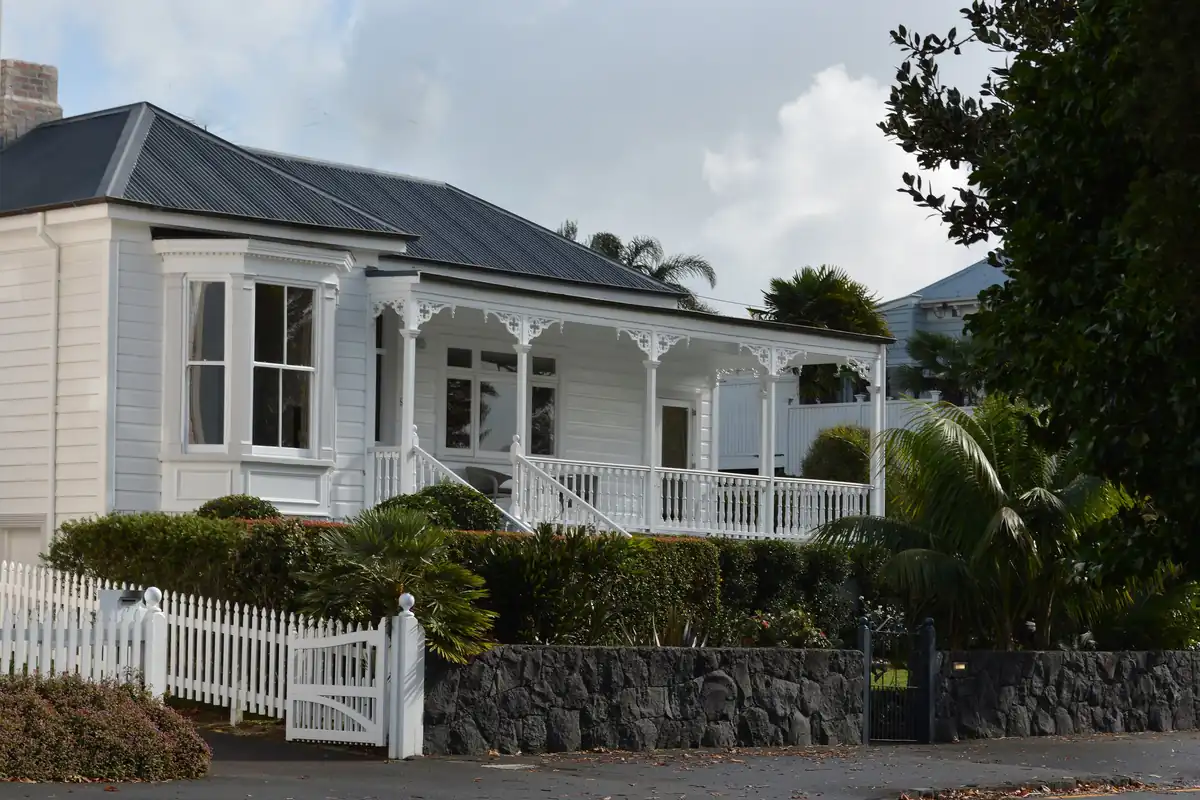
Why whites wear well
Light colours reflect more of the sun’s energy, so the surface stays cooler. On timber that means less swelling and shrinking each day, less stress on the paint film and fewer cracks at board edges. BRANZ advises choosing colours with a light reflectance value of 45% or more on weatherboards for best performance.
Whites also fade less noticeably than strong colours, which helps on north and west walls that take the most sun.
Light reflectance value in plain terms
Light reflectance value, or LRV, is a scale from 0 (black) to 100 (perfect white) showing how much visible light a colour reflects. Most paint makers publish it on the colour card or online. Most whites and off-whites sit well above 45, while mid-greys sit around the middle and charcoals near the bottom.
| Colour family | Typical LRV band | Heat on timber |
|---|---|---|
| Whites and off-whites | High | Lowest |
| Light greys, creams, pale colours | Upper middle | Low |
| Mid tones | Middle | Moderate |
| Charcoals, deep colours, black | Low | Highest |
Warm whites and cool whites
Whites carry a hint of another colour. Warm whites lean yellow, red or brown and look soft in strong light; cool whites lean blue, green or grey and look crisp and clean. Auckland’s bright, clear light tends to make pure white glare, which is why many owners step back to a softer white or an off-white.
- Warm and off-whites: villas, bungalows, natural timber joinery, red or green roofs.
- Cool, crisp whites: modern forms, dark aluminium joinery, charcoal roofs.
- Very bright whites: can glare on sunny walls and near the sea.

Working with the roof and joinery
The roof and the window joinery are usually fixed, so the white is chosen to sit with them. A warm white next to a warm roof colour feels settled; a cool white beside a charcoal roof looks sharp. Aluminium joinery in silver, bronze or black also shifts which white works best.
Choosing exterior colours sets out a simple order for the whole scheme.
Testing a white properly
Paint a large sample, at least an A3 sheet or a section of wall, on both a sunny and a shaded side, and look at it morning, midday and evening. Whites read very differently in shade and sun, and against the neighbouring house. Two or three candidates side by side make the choice easy.
- Shortlist two or three whites with LRVs you know.
- Paint large samples on a sunny and a shaded wall.
- View them at different times of day and from the street.
- Check them next to the roof, joinery and trim.
Dirt, mould and upkeep
White shows dirt, mould and rust stains sooner than mid tones. On shaded or bush-edge walls, a white house may need washing more often to look its best. That is also good for the paint: BRANZ recommends washing exterior paintwork at least once a year to remove dirt, salt and mildew.
Mould before painting covers treatment before a repaint.
Trim and joinery whites
Trim is often painted in a slightly different white from the walls, or in the same colour in a higher-sheen enamel. A contrasting white picks out villa fretwork, sashes and fascias; a matching one gives a quieter, modern look. Either way, keep to one trim white across the house.
Doors, windows and trim covers the enamel side.
Asked before a repaint
- Is white a good colour for a house exterior?
- For durability, yes. Light colours reflect more sunlight, so timber stays cooler and moves less, and BRANZ suggests a light reflectance value of 45% or more on weatherboards for best performance. The trade-offs are glare on sunny walls and dirt or mould showing sooner on shaded ones.
- Warm white or cool white for a villa?
- Many villa owners choose a softer, warmer white or an off-white, which looks less stark in strong light and sits well with traditional joinery and corrugated iron roofs. Cool, crisp whites suit modern houses with dark joinery. Test large samples on two walls before deciding.
- Why does my white house look different from the sample?
- Colour changes with light, scale and surroundings. A small card indoors looks darker than the same colour on a whole wall in Auckland sun, which tends to wash whites out. Large painted samples, viewed at different times of day on a sunny and a shaded wall, are the fair test.
- Should trim be the same white as the walls?
- Either works. Matching gives a calm, modern look; a contrasting, slightly brighter or warmer white on joinery and trim picks out detail, which suits villas and bungalows. The trim is usually enamel, so it has a little more sheen than the walls even in the same colour.
Sources
When the reading is done and the brushes need picking up, house painters in Auckland is where a quote starts.
Ask us for a painting quote
Tell us about the house and the job. We reply with questions, or a day to walk around it with you.