How to repaint the outside of a house
Repainting a house that is already painted comes down to three decisions made in order: whether the old paint is due, how much of it has to come off, and what colour goes on. The first two set most of the cost; the third is the fun part. This note walks through each one. For how the work itself is done, see exterior house painting.
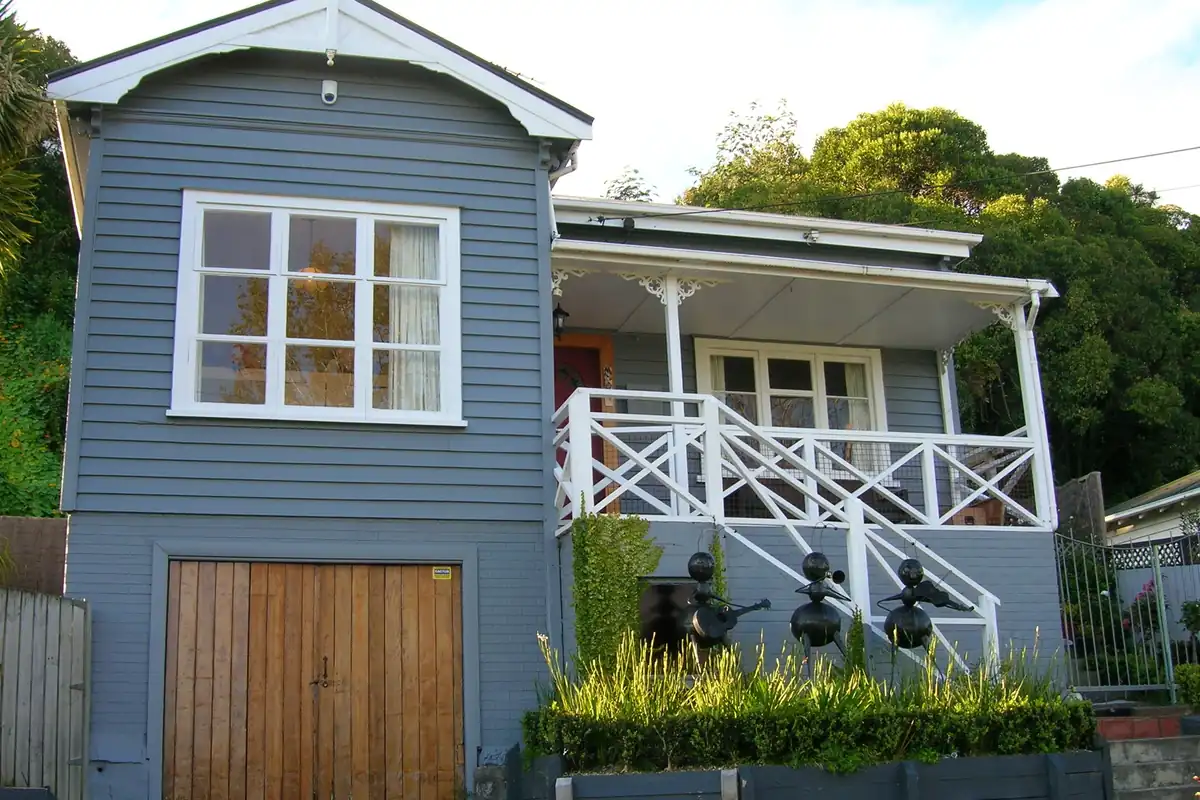
Is the outside due for a repaint?
BRANZ puts the usual exterior repaint cycle at about 7 to 10 years. The house tells you sooner than the calendar: powder on your fingers when you rub a wall, hairline cracks at board ends, bare timber on sills, and colour gone pale on north and west faces. One or two of those on a sunny wall is a sign to plan; all of them is a sign to book.
- Chalking: a dusty bloom that wipes off. The film is thinning but often still sound.
- Cracking at joints and ends: water gets in here first, so these spots set the timetable.
- Flaking or bare wood: past a simple recoat; scraping and priming are needed.
- Fading: mostly cosmetic, unless chalking comes with it.
How long exterior paint lasts goes through what shortens the cycle.
Find out what is already on the walls
Before choosing anything new, learn what the old coating is. The age of the house matters most: WorkSafe advises presuming lead-based paint on any building from the 1980s or earlier, which changes how scraping and sanding are done. Then check whether the top coat is acrylic or oil-based, and whether it is still stuck firmly to the boards.
- Age: built in the 1980s or earlier, plan for lead-safe prep, or test for lead first.
- Type: a cotton bud with methylated spirits on a hidden spot shows acrylic or oil-based; acrylic or oil-based paint explains what each means for a recoat.
- Grip: the tape test on a few walls shows whether the old coat is holding; surface prep describes it.
- Hidden extras: in a house built before 2000, check fibre-cement and textured coatings for asbestos before anyone sands them.
Three sizes of repaint
Most repaints fall into one of three sizes, set by how well the old paint is holding. A sound house needs a wash, a light sand and two topcoats. A house with patches of failure needs those patches scraped back and primed first. A house where paint is lifting across whole walls needs taking back much further, and that is where cost climbs quickly.
| State of the old paint | What is done | Coats that go on |
|---|---|---|
| Sound, chalky or faded | Wash, light sand, fill small gaps | Two finish coats |
| Sound with patches failing (sills, board ends, sunny walls) | Wash, scrape patches back, sand edges, spot-prime bare timber | Primer on bare spots, then two finish coats |
| Lifting or cracking across whole walls | Strip back to a sound base, often to bare timber on the worst faces | Primer, undercoat, two finish coats |
Many Auckland houses are a mix: the shaded south side may only need a wash and recoat while the north and west faces need the bigger treatment. A good quote splits the house up this way rather than pricing one level for every wall.
Keep the colour, or change it?
Repainting in the same colour is the cheapest and simplest route: patches of new primer disappear under two topcoats and any missed spot hardly shows. A new colour asks more. Going from dark to light usually needs a tinted undercoat or a third coat, and published Auckland figures put that extra topcoat at about $500 to $1,200 on an exterior.
A colour change is also the moment to think about heat. BRANZ suggests a light reflectance value of 45% or more on timber weatherboards, so swapping a pale house for a charcoal one is not only a style question. Dark exterior colours covers the trade-offs.
Trying colours on a photo of your house
Free colour tools let you see a scheme on your own house before buying a single tester. Dulux New Zealand’s colour visualisation tool runs online and accepts your own photo. Resene’s EzyPaint, its long-running free virtual painting software, was listed as being redeveloped when we checked in November 2026. Either way, a screen only gets you to a shortlist.
- Take the photo in even daylight, square on to the house, with the walls filling most of the frame.
- Try the roof and joinery colours you already have first, since those are not changing.
- Use the tool to rule colours out, not to pick the winner: screens and printers shift colour.
- Order large swatches or testpots of the two or three survivors and paint them on a sunny and a shaded wall.
Choosing exterior colours sets out the order for building a scheme around the roof.

Ideas for the outside that suit Auckland houses
The schemes that age well on Auckland streets are usually simple: one body colour, one trim colour, and one accent on the front door. Villas and bungalows suit a mid-tone body with a lighter trim that picks out fretwork and sashes. Plain post-war houses look crisp in a light body with matching trim. Modern boxes carry darker accents best on small areas.
| Scheme | Suits | Watch for |
|---|---|---|
| Mid-tone body, lighter trim, strong front door | Villas, bungalows, character streets | Trim colour must sit with the roof |
| Light body, matching or near-matching trim | State houses, brick-and-tile trim, 1970s to 90s homes | Shows dirt and mould on shaded walls |
| Light body, dark joinery or feature panel | Modern and renovated houses | Keep dark colours off sunny timber |
If the house is in a special character area or is a scheduled heritage place, a traditional palette is the safe start, and heritage and character homes explains the extra rules.
Painting a brick house white
Painting unpainted brick white is popular, and it can transform a dated 1970s house, but it is close to permanent. Clay brick on its own needs almost no maintenance; once painted, it joins the repaint cycle for good, and getting paint back out of brick is slow, messy work. Go in knowing it is a commitment rather than a refresh.
- Fix any damp first. White salts on the brick mean water is moving through it, and paint will be pushed off.
- Use a breathable paint made for masonry, over a sealer suited to brick, so the wall can still dry out.
- Consider painting only the trim and fascias: on many brick-and-tile houses that alone changes the look.
- On a scheduled heritage place, the Unitary Plan’s D17 overlay rules mean painting a surface that was never painted can need consent from Auckland Council.
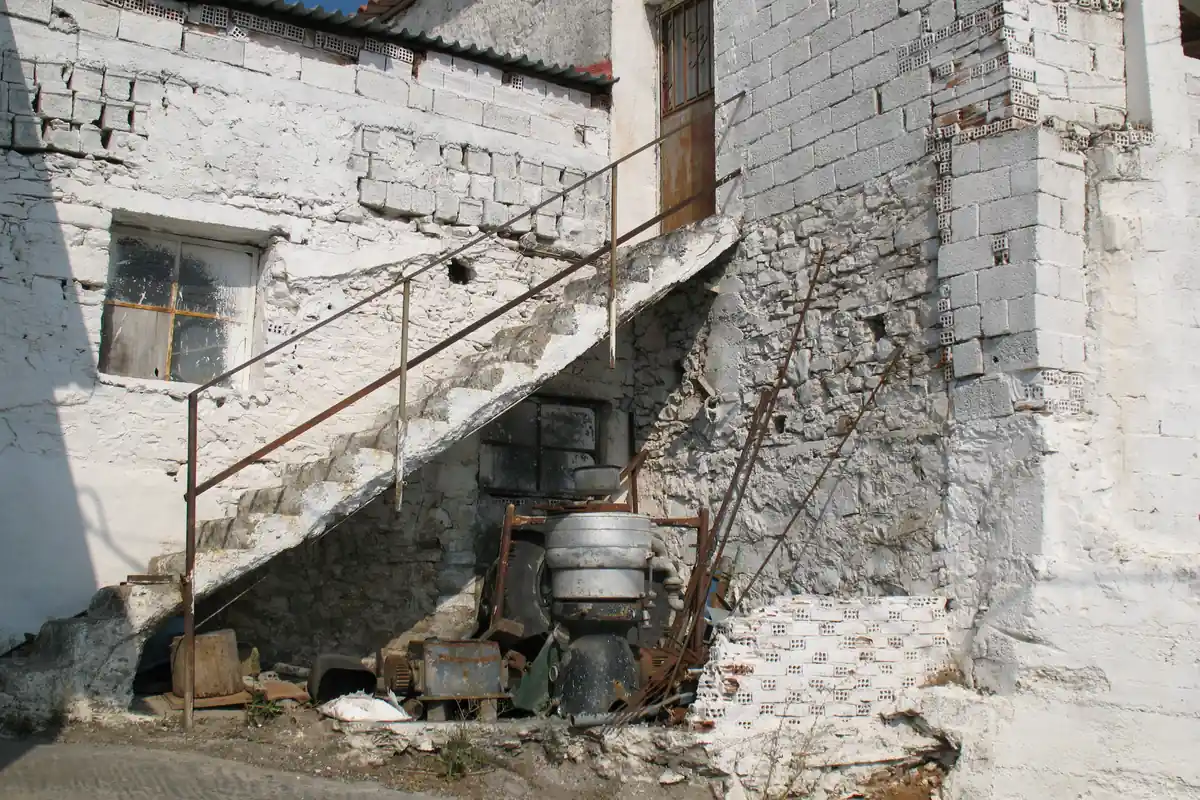
Painting brick, plaster and roughcast covers sealers, salts and rates.
The order a repaint goes in
Everything is washed and prepped before any colour goes on, so dust and scrapings never land on fresh paint. Then the work runs from the top down: gutters, fascias and soffits first, then the walls, then windows, doors and the trim around them, with the front door last. Each wall is painted once the sun has moved off it.
- Wash the whole house and let it dry for a day or more.
- Scrape, sand, fill and spot-prime every face, worst walls first.
- Paint high work first: fascias, barge boards, soffits and gutters.
- Lay the walls in two coats, following the shade round the house.
- Finish joinery, trim, doors and decks last, then touch up.
In Auckland that order runs into the weather. Morning dew and showers stop wall coats more often than anything else, which is why the weather for exterior painting deserves a read before a start date is set.
Can exterior paint go on inside walls?
It can be brushed on, but it is the wrong tool. Exterior house paints are made to stay flexible on moving cladding and to resist sun, rain and mould. Interior wall paints are formulated for indoor walls, with easier wiping and lower odour. Paint makers list them as separate products, so use leftover exterior paint outside and buy interior paint for rooms.
One exception is common: some waterborne enamels for timber windows and doors are sold for inside and out, which is why a front door can match its frame on both faces. For indoor air, low-VOC paint indoors covers what to ask for.
What a repaint costs and how long it takes
Published Auckland figures for repainting the outside of a three-bedroom, single-storey house run from about $5,000 to $15,500, with most between $8,000 and $14,000. Two-storey houses, villas with fretwork, heavy flaking and lead-safe prep all push it higher. Time is set by the house and the weather, so a written quote gives an estimate in working days.
What painting costs has the full table by house type, and reading a painting quote shows what each line should say. A quote that splits the house into faces, with the prep listed for each, is the easiest to compare; ask for one here.
Asked before a repaint
- How do you repaint the outside of a house?
- Check that the old paint is due and still holding, find out what it is and whether it contains lead, then wash, scrape back loose paint, fill, spot-prime bare timber and lay two finish coats on dry days. How much scraping is needed decides most of the time and cost, so judge the old coat before choosing colours.
- Can you use exterior paint indoors?
- It is not what it is made for. Exterior house paints are formulated to flex with cladding and stand up to sun and rain, and paint makers sell separate interior wall paints that are harder wearing to wipe and lower in odour. Use what the label or data sheet says the product is for, and ask the maker if unsure. Some enamels for timber doors and windows are sold for inside and out.
- Is there a free app to see paint colours on my house?
- Yes. Dulux New Zealand has a free online colour visualisation tool that lets you upload your own photo and try its colours on it. Resene’s free EzyPaint virtual painting software was being redeveloped when we checked in November 2026. Screen colours are only a guide, so confirm any choice with a large painted sample on the wall.
- Should I paint my brick house white?
- Only if you are happy to keep repainting it. Unpainted clay brick needs almost no upkeep, while painted brick needs a repaint roughly every decade, and taking paint back off brick is hard. If you go ahead, deal with any damp first and use a breathable masonry paint. Painting just the trim is a much smaller job.
Sources
- BRANZ Bulletin 633: removing paint coatings (PDF)
- WorkSafe: managing lead-based paint
- Dulux NZ: how to use the colour visualisation tool
- Resene: EzyPaint virtual painting software
- Habitat by Resene: figuring out paint types
- Resene: maintaining exterior painted surfaces
- MoneyHub: house painting services in Auckland
When the reading is done and the brushes need picking up, Eggshell & Co Painting is where a quote starts.
Ask us for a painting quote
Tell us about the house and the job. We reply with questions, or a day to walk around it with you.