Dark, charcoal and black exteriors
Dark greys, charcoals and black look striking on modern Auckland houses, but they absorb far more heat than light colours, which stresses timber and paint. BRANZ suggests a light reflectance value of 45% or more on weatherboards for best performance, and some cladding makers set their own minimums. A dark scheme can work with the right cladding, paint and placement. The main colour guide is choosing exterior colours; the work is exterior painting.
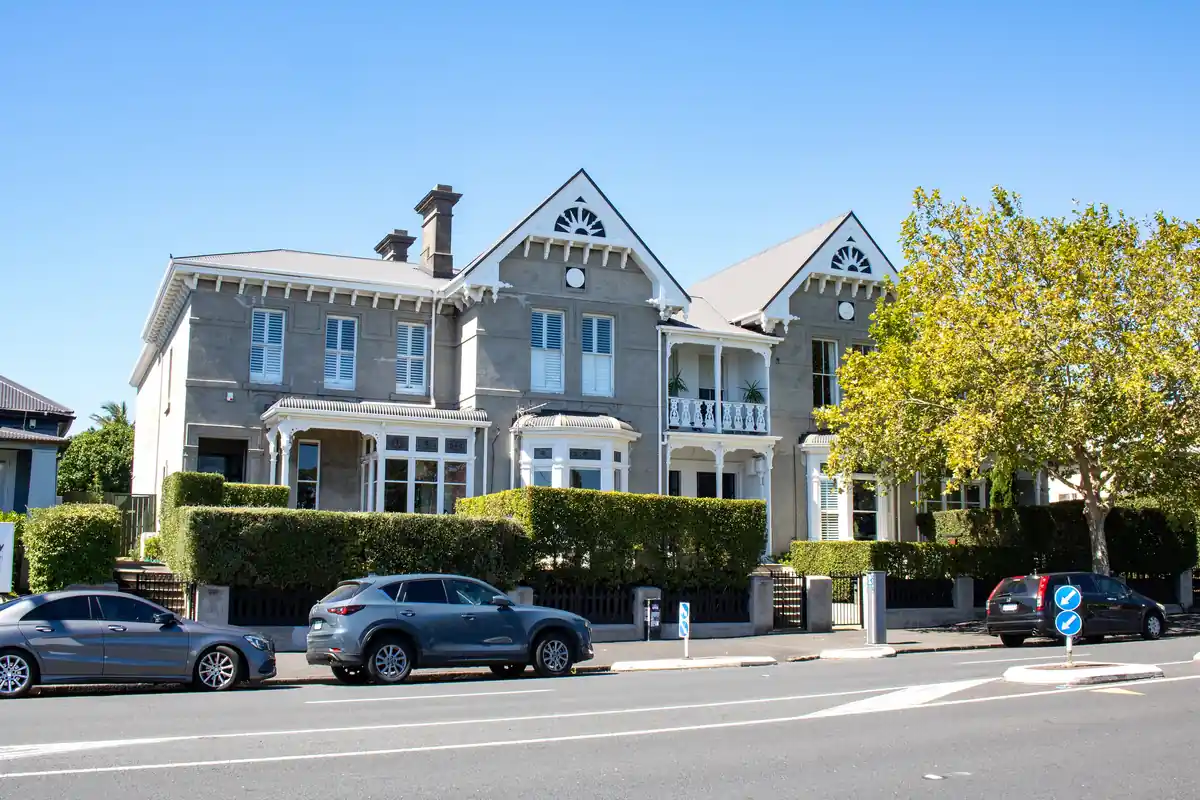
What dark colours do to timber
Dark surfaces absorb more sunlight and get much hotter than light ones. Timber cladding then swells and shrinks more each day, which stresses the paint film at board edges and joints, and can cause cracking, warping, cupping and resin bleeding from knots. BRANZ notes that darker colours mean more thermal movement in timber.
The effect is strongest on north and west walls in full sun, and on boards with little shade from eaves.
The LRV guidance
BRANZ’s weatherboard guidance says dark colours absorb heat, recommends a light reflectance value of 45% or more for best performance, and notes that some board makers require it. Charcoals and blacks have LRVs well below that. Before choosing one, check what the cladding maker says, because a colour outside their limit can affect their product terms.
- Find the LRV of the colour on the paint maker’s card or site.
- Check the cladding maker’s technical information for colour limits.
- Ask your painter which paint system they would use with that colour.
Infrared-reflective tints
Some paint makers offer dark colours made with infrared-reflective pigments, which reflect more of the sun’s heat while still looking dark. BRANZ notes that these can reduce the movement dark colours cause. They narrow the gap, but they do not turn a black into a white; the LRV guidance still applies.
Ask for the specific product rather than assuming any dark tint is heat-reflective.

Where dark colours work best
Dark colours behave best where heat is less of a problem: on masonry and plaster rather than timber, on walls shaded by deep eaves, on south faces, and in small areas such as a front door, window frames or a feature wall. Many modern houses combine a dark accent with lighter main walls.
| Placement | Risk from heat |
|---|---|
| Front door, small accents | Low |
| South walls, deep eaves | Lower |
| Masonry or plaster | Lower than timber |
| North and west timber walls in full sun | Highest |
Fading and patchiness
Dark and strong colours show UV fading sooner, mostly on sunny walls, which can leave the house looking two-tone after a few years. Touch-ups also show more on dark colours, because fresh paint is darker than weathered paint. Good paint, two full coats and keeping a labelled tin for touch-ups help.
How many coats of paint explains why the second coat matters even more on dark colours.
Going from dark back to light
Changing a dark house to a light colour later takes extra coats. Light colours do not cover dark ones well, so a tinted undercoat or a third topcoat is common. Published Auckland figures put an extra topcoat for a colour change at about $500 to $1,200 on an exterior.
What painting costs shows the other drivers.
Planning a dark scheme
Check the cladding maker’s colour guidance, choose a heat-reflective version where offered, use lighter colours on the hottest timber walls, and test a large sample in full sun. Dark trim and doors against lighter walls give much of the look with less risk.
White exterior colours covers the other end of the scale.
Asked before a repaint
- Can you paint a weatherboard house black?
- You can, but it asks more of the timber and the paint. Dark colours absorb more heat, which makes timber swell and shrink more and can lead to cracking, warping and resin bleed. BRANZ suggests a light reflectance value of 45% or more for best performance, and some cladding makers set their own limits. Check before choosing.
- Do dark exterior colours fade faster?
- Dark and strong colours usually show fading sooner, because the change is easier to see and because they take the most heat and UV on sunny walls. North and west faces fade first. Quality paint and lighter-than-black versions of a dark colour help.
- What are infrared-reflective paints?
- Paints made with pigments that reflect more of the sun’s infrared heat while still looking dark. BRANZ notes that they can reduce the extra movement dark colours cause in timber. They help, but they do not make a dark colour behave like a white.
- Is a dark house hotter inside?
- A dark exterior surface gets hotter in sun, and some of that heat reaches the structure. How much reaches the rooms depends on insulation, wall build-up and shading. The bigger concern for painters is the effect on the cladding and the paint film.
Sources
When the reading is done and the brushes need picking up, Eggshell & Co Painting is where a quote starts.
Ask us for a painting quote
Tell us about the house and the job. We reply with questions, or a day to walk around it with you.